
Tooth Nerve Pain Relief: How to Stop Pain Fast and Safely
Tooth nerve pain relief focuses on calming irritated nerves, reducing inflammation, and protecting the tooth from further damage. Cold compresses, salt water rinses, and avoiding pressure on the affected tooth can provide fast, temporary relief. However, lasting tooth nerve pain relief depends on treating the underlying cause of nerve irritation before it worsens.
Tooth Nerve Pain Relief: What You Need to Know First
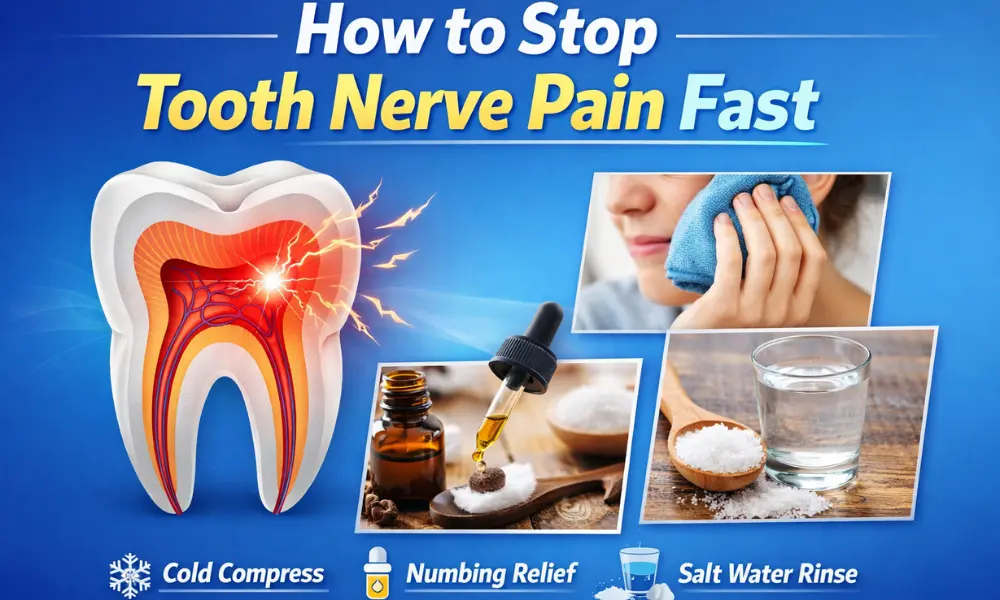
Tooth nerve pain relief starts with understanding why the pain happens in the first place. Inside each tooth is a sensitive nerve that reacts strongly when enamel or dentin becomes damaged. This exposure allows heat, cold, pressure, or bacteria to irritate the nerve and trigger sharp or throbbing pain. Effective tooth nerve pain relief focuses on calming this irritation, reducing inflammation, and protecting the tooth from further damage. While some methods provide quick relief, long-term comfort depends on addressing the root cause before the pain worsens.
If you’re looking for instant guidance and a quick overview, visit our complete guide on kill tooth pain nerve in 3 seconds permanently.
Fast Ways to Stop Tooth Nerve Pain
To understand how to stop tooth nerve pain, you need to know why it starts. Inside every tooth is soft tissue called pulp. This pulp contains nerves and blood vessels. When enamel or dentin breaks down, the nerve becomes exposed or irritated.
Pain can feel sharp, throbbing, or electric. Cold air, hot drinks, or pressure can trigger it. The goal of relief is to reduce nerve stimulation and lower inflammation around the tooth.
How to Relieve and Ease Tooth Nerve Pain Safely
Learning how to relieve tooth nerve pain focuses on reducing irritation and calming the nerve without causing further damage. Many people try to ease tooth nerve pain by lowering inflammation, limiting pressure on the tooth, and avoiding common triggers like heat, cold, or hard chewing. This approach does not force the pain to stop instantly, but it provides steady tooth nerve pain relief that helps control discomfort and prevent flare-ups.
How to Soothe and Calm Tooth Nerve Pain Naturally
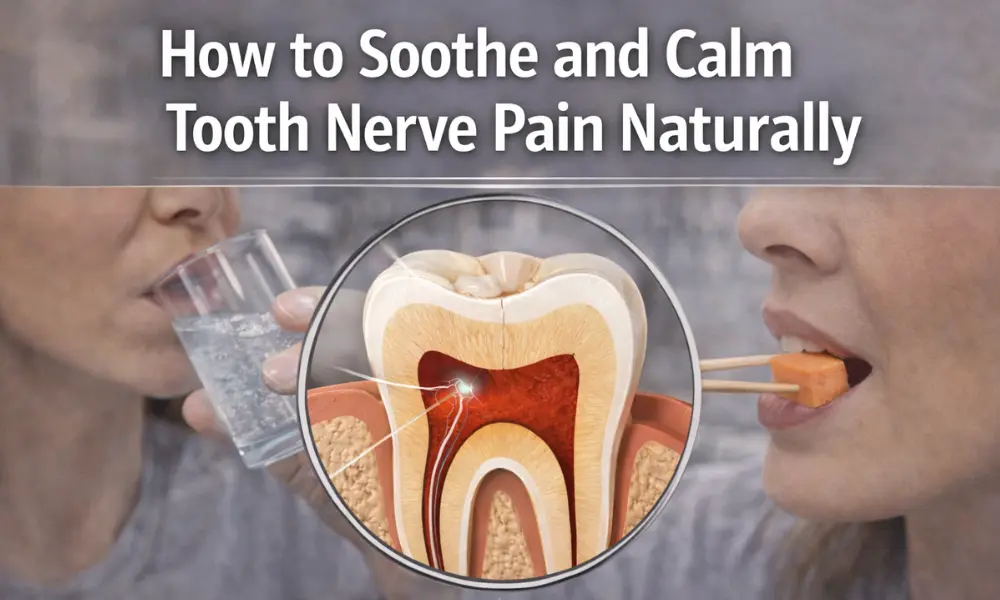
To soothe nerve pain in a tooth, the focus should be on gentle care that allows the nerve to relax instead of triggering it further. These simple steps help calm tooth nerve pain safely over time:
- Keep the mouth clean
Good oral hygiene removes bacteria that irritate the nerve and helps soothe nerve pain in a tooth gradually. - Rinse gently and regularly
Proper rinsing supports gum health and helps calm tooth nerve pain by reducing inflammation. - Avoid pressure on the affected tooth
Chewing on the opposite side prevents extra stress and allows the nerve to settle. - Stick to gentle habits
Soft foods and careful brushing reduce stimulation and help soothe nerve pain in a tooth without causing damage. - Be consistent, not aggressive
Regular gentle care works better than harsh methods when the goal is to calm tooth nerve pain naturally.
What Helps Tooth Nerve Pain? Simple Answers for Beginners
Many people experiencing tooth discomfort want to know what helps tooth nerve pain before trying stronger measures. In most cases, simple steps that reduce irritation and protect the nerve can make a noticeable difference. Keeping the mouth clean, avoiding pressure, and calming inflammation are often good for tooth nerve pain, especially in its early stages. These methods help manage discomfort safely while preventing the pain from becoming worse.
How to Stop Nerve Pain in Tooth at Home (Safe Daily Care)
Many people look for relief before they can visit a dentist. Learning how to stop nerve pain in tooth at home focuses on calming the nerve and protecting the affected area without causing further damage.
Simple Ways to Calm Nerve Pain at Home
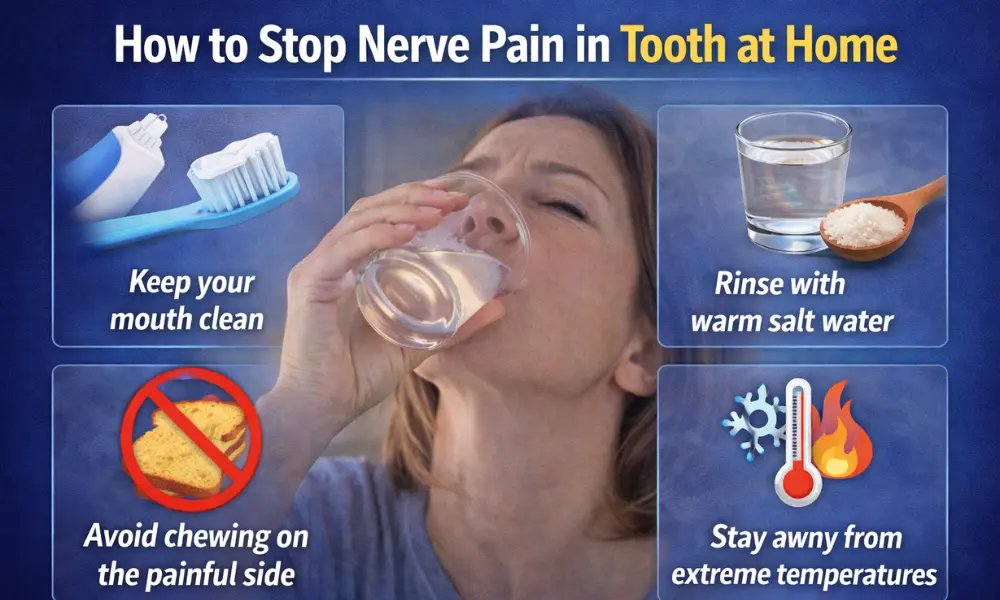
- Keep your mouth clean
Food particles and bacteria increase irritation. Gentle brushing helps reduce nerve sensitivity. - Rinse with warm salt water
Salt water lowers bacteria levels and soothes inflamed gums, helping calm the nerve. - Avoid chewing on the painful side
Pressure on the affected tooth can intensify nerve pain. - Stay away from extreme temperatures
Very hot or cold foods can trigger sharp nerve pain and worsen sensitivity.
Stop Tooth Nerve Pain Without Making It Worse
Some actions may seem helpful but can actually increase pain. Avoiding these mistakes is just as important as relief methods.
What to Avoid
Do not experiment with random remedies
Unproven methods may worsen irritation instead of calming the nerve.
Do not press sharp objects on the tooth
This can damage enamel and irritate the nerve further.
Avoid using extreme heat
Heat can increase inflammation and make nerve pain worse.
How to Stop Tooth Nerve Pain Fast (Emergency Relief)
Tooth nerve pain can feel overwhelming. Knowing how to stop tooth nerve pain fast helps calm the nerve and ease discomfort until proper treatment is possible.
Fast Ways to Stop Tooth Nerve Pain
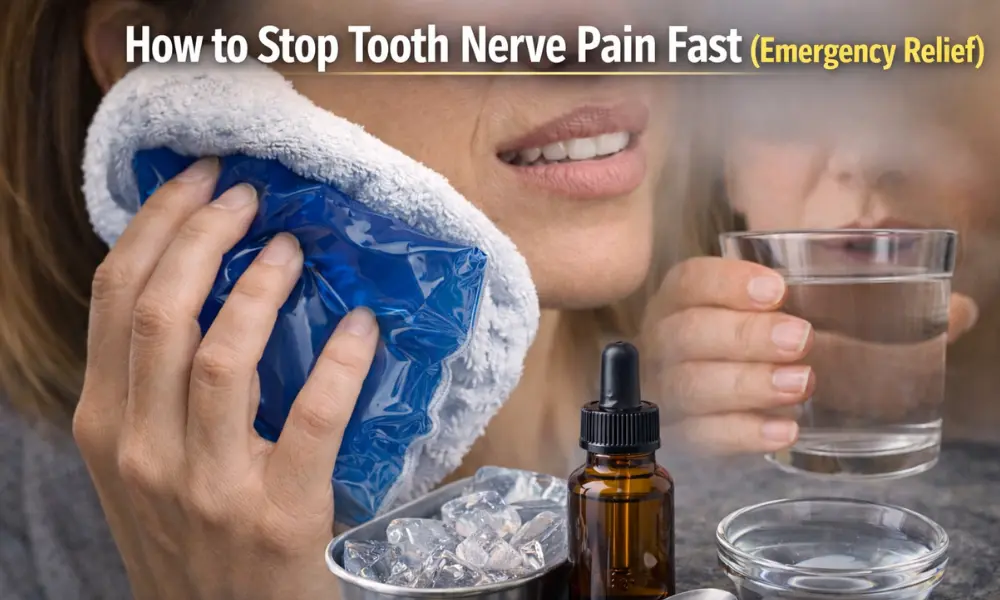
Keep your head elevated
Sitting upright or raising your head reduces blood flow pressure near the tooth, which helps calm nerve pain quickly.
Use cold therapy immediately
Apply a cold compress to the outside of the cheek near the painful tooth. Cold constricts blood vessels, reduces pressure around the nerve, and can lower pain within minutes.
Rinse with warm salt water
Salt water helps reduce bacteria and soothe irritated gum tissue. This lowers inflammation around the nerve and supports fast pain control.
Avoid pressure on the painful tooth
Do not chew on the affected side. Pressure increases nerve irritation and can make pain worse.
Use a gentle numbing option
Clove oil can help numb nerve endings when applied carefully. It may reduce sharp pain for a short period.
Instant Tooth Nerve Pain Relief — What Really Helps
Instant tooth nerve pain relief is possible, but it is usually temporary. Relief comes from blocking pain signals or reducing inflammation.
Over-the-counter pain relievers can help. Anti-inflammatory options reduce swelling around the nerve. Avoid placing aspirin directly on the tooth, as this can damage gum tissue. These methods may ease tooth nerve pain temporarily, but lasting relief depends on treating the underlying cause.
How to Stop Tooth Nerve Pain Instantly (Myths vs Reality)
Many myths promise instant cures. There is no safe home method to permanently kill a tooth nerve instantly. Pain may fade quickly, but the nerve remains sensitive until the underlying problem is treated.
Immediate Relief for Tooth Nerve Pain at Night
Tooth nerve pain often feels worse at night, which is why many people look for immediate relief for tooth nerve pain before trying to sleep. This happens because body position and reduced mouth activity can increase nerve pressure.
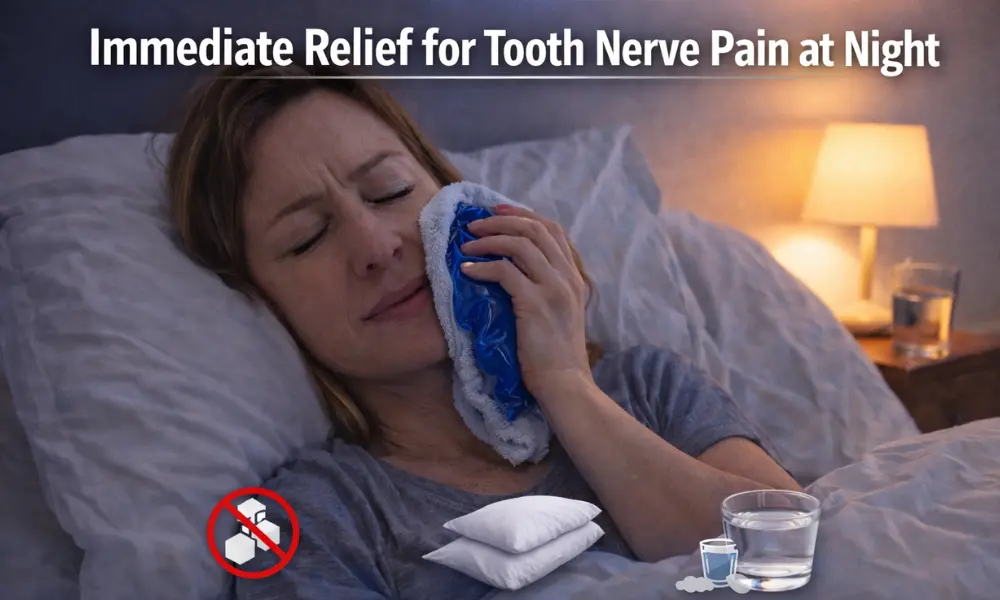
Why Tooth Nerve Pain Gets Worse at Night
- Lying flat increases blood pressure in the head
When you lie down, blood flow to the head rises. This extra pressure inside the tooth can intensify nerve pain. - Fewer distractions make pain feel stronger
At night, there is less noise and activity, so nerve signals become more noticeable. - Reduced saliva allows irritation
Saliva flow drops during sleep, making it easier for bacteria to irritate sensitive areas of the tooth.
How to Get Immediate Relief for Tooth Nerve Pain at Night
Avoid late-night sugar or acidic foods
These can trigger nerve sensitivity and make pain worse during sleep.
Keep your head elevated while sleeping
Use an extra pillow to reduce pressure around the tooth nerve.
Rinse your mouth before bed
A gentle salt water rinse helps clean bacteria and soothe irritated gum tissue.
Nerve Pain in Tooth — How to Stop It Safely
Some people experience recurring discomfort and wonder nerve pain in tooth how to stop safely without causing more damage. The safest approach focuses on protecting the nerve rather than forcing the pain to stop.
Safe Ways to Reduce Nerve Pain in a Tooth
- Protect exposed areas of the tooth
Temporary dental cement can cover exposed dentin and reduce direct nerve stimulation. - Avoid grinding or clenching your teeth
Excess pressure irritates the nerve and can worsen pain over time. - Limit acidic and sugary foods
Acids wear down enamel and increase sensitivity, making nerve pain stronger. - Chew on the opposite side
Reducing pressure on the affected tooth helps calm the nerve.
Mistakes That Make Tooth Nerve Pain Worse
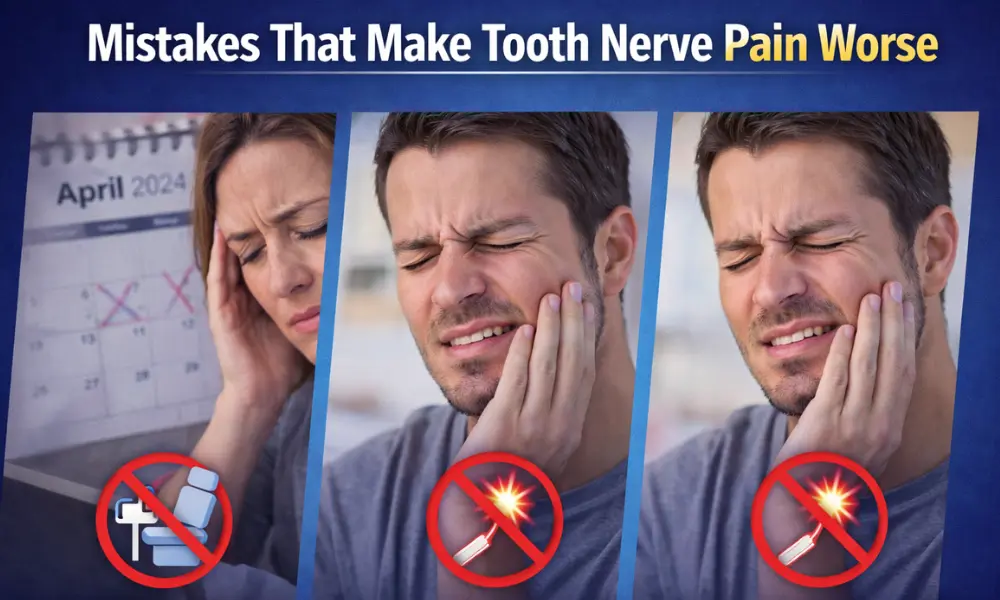
Postponing dental care too long
If pain lasts more than a few days or spreads to the jaw, professional treatment becomes necessary.
Ignoring ongoing pain
Nerve pain is a warning sign. Delaying action often leads to stronger pain.
Chewing ice or hard foods
This can crack enamel further and irritate the nerve.
Can Tooth Nerve Pain Be Killed Permanently?
Many people search for ways to kill tooth nerve pain permanently, but it is important to understand what this really means. There is no safe way to kill a tooth nerve instantly at home. Attempts to forcefully stop nerve pain can cause serious damage and infection. Permanent relief from tooth nerve pain only happens when the underlying cause is treated, usually through professional dental procedures. These treatments remove or protect the damaged nerve safely rather than harming surrounding tissue.
When Fast Relief Is Not Enough
Fast relief methods can help manage tooth nerve pain for a short time, but they do not fix structural damage inside the tooth. If decay reaches the pulp or an infection develops, pain usually returns.
At this stage, home care alone is no longer enough. Ongoing sensitivity, swelling, or throbbing often points to a deeper dental problem.
Severe and Extreme Tooth Nerve Pain: What It Means
Severe or excruciating tooth nerve pain usually signals a deeper problem inside the tooth. Severe tooth nerve pain often feels sharp, intense, or throbbing and may spread to the jaw, ear, or head. When pain becomes extreme, home methods provide little relief because the nerve is highly inflamed or infected. In these cases, professional dental treatment is often required to stop the pain safely. Severe tooth nerve pain relief usually requires professional evaluation because extreme pain often signals infection or deep nerve damage.
Signs You Need Dental Treatment for Tooth Nerve Pain
No relief from basic home methods
If cold compresses or rinses stop working, the issue is likely deeper.
Pain lasts longer than 48 hours
Persistent pain usually means the nerve is inflamed or infected.
Pain worsens at night
Increasing night pain often signals pressure inside the tooth pulp.
Swelling around the tooth or gums
Swelling can indicate infection that requires professional care.
Throbbing or spreading pain
Pain that moves to the jaw, ear, or head should not be ignored.
Final Takeaway — Best Way to Stop Tooth Nerve Pain
The best way to stop tooth nerve pain is understanding its cause and acting early. Fast relief methods calm the nerve and reduce pressure. They help you cope in the moment. Long-term relief comes from treating damage before it worsens.
If pain keeps returning, the nerve is warning you. Listen to it early, protect the tooth, and seek proper care when needed.